Organic Ecommerce Leads from Reels and Shorts
How to turn Instagram Reels and YouTube Shorts into trackable ecommerce leads in 2026: hooks, posting cadence, comment-to-DM capture, UTMs and follow-up.
Direct answer
Organic ecommerce leads from Instagram Reels and YouTube Shorts come from four things working together: posting at high frequency (four to five times a week minimum), hooks that earn the first three seconds, mostly educational rather than product-showcase content, and a capture mechanism — usually comment-to-DM — that turns an interested viewer into a one-to-one conversation. Views are not leads. The capture step is what converts attention into pipeline.
A few years ago short-form video was mostly a brand awareness channel. You posted a Reel, got views, maybe picked up followers. Turning those views into leads felt indirect at best.
That has changed. Instagram Reels now reaches non-followers at a rate regular posts do not — a brand with 2,000 followers can post a Reel seen by 50,000 people if it performs in the first hour. YouTube Shorts behaves similarly, feeding a recommendation engine that can put a new channel in front of hundreds of thousands of viewers within days.
Practically, a well-structured short-form strategy gives a small brand access to a volume of potential buyers that would cost thousands of rupees a day through paid ads. The trade-off is time and consistency instead of money. For how that weighs against paid, see organic versus paid ecommerce marketing.
Post frequency is the strategy
Posting once a week and hoping the algorithm finds you is not a strategy. The baseline for meaningful organic reach on Reels or Shorts is four to five posts per week. Many of the fastest-growing ecommerce brands post daily or close to it — not because every video is perfect, but because frequency gives the algorithm more chances to find your audience and gives you more data.
The mindset shift that matters: stop treating each video as a piece of art and treat it as a test. Some tests perform. Most will not. The ones that do tell you what your specific audience responds to, and you make more of those.
Running more than one account safely
Brands often want a second account to test angles or protect the main profile while posting aggressively. On Instagram that is allowed, but the platform watches for behaviour that looks automated: identical content across accounts, scripted engagement patterns, bulk follow and unfollow. Give each account a genuine identity — different content angles, posting times, bios and visual styles. Accounts that behave like real human-run profiles attract far fewer restrictions.
On YouTube the rules are simpler: multiple channels under one Google account are fine. The real risk is duplicate content. Uploading the same Short to several channels gets it deprioritised, so each channel needs its own content even if themes overlap.
Train your feed before you post
What your brand account consumes shapes which audiences and creators end up in your orbit. When you set up the account, spend the first few days deliberately: follow creators and brands in your niche, watch category-relevant videos all the way through, save and share what your ideal buyer would engage with, and comment thoughtfully on posts your target audience follows.
This teaches both platforms who your account is for. Once established, your content is recommended to the right people instead of a broad random audience. A home decor brand wants its Reels appearing for people who follow interior design creators and save home setup videos. That audience converts. A general audience does not.
Creating Reels and Shorts that convert
Good content and high-converting content are not the same thing. A video can be beautifully shot and generate zero leads if it does not move the viewer toward an action. High-converting short-form is built around one outcome, and everything from the first frame to the last points at it.
Hooks and retention
The hook is the first one to three seconds. On both platforms, average watch time and completion rate are the primary signals telling the algorithm whether to push your content further. A weak hook means low retention, which buries the video regardless of how good the rest is.
A strong hook does one of three things:
- Creates specific curiosity by promising something the viewer wants to know.
- Interrupts the pattern with something visually or verbally unexpected.
- Speaks to one person's exact situation so they feel seen.
"Here is why most Indian ecommerce sellers lose money on COD orders" works because it is specific, implies the viewer may be making a mistake, and creates curiosity. "Check out our new product" is an announcement. Nobody stops scrolling for an announcement.
The first frame matters separately from what is said. Bright, high-contrast visuals outperform dark or busy ones. Text on screen in the first second catches attention before audio registers — and many people watch with sound off, so a hook that only works with audio loses half its audience before the video starts.
Test hooks directly: post the same video with two different openings and compare completion data. Across enough tests, patterns emerge.
Production quality that actually matters
Production quality does not mean expensive cameras. It means consistency and intention. A phone video in good natural light with clean audio and a consistent visual style looks more professional than an expensive shoot with inconsistent colour and poor framing.
Colour grading is one of the simplest ways to build a recognisable identity. When someone recognises your video before seeing your handle, that is brand authority forming. Consistent colour, fonts and aspect ratio all contribute.
Shoot vertical, 9:16. Horizontal footage awkwardly cropped performs poorly because it looks like an afterthought. Cut quickly — every two to three seconds rather than holding one shot for eight — because constant visual change holds attention. Jump cuts, timed text overlays and on-screen captions all help viewers reach the end. CapCut, InShot and VN are free and more than good enough.
Educational content outperforms product showcases
Most brands get this wrong early. They post product showcases because that feels closest to selling. In practice, educational content drives more leads — and often more direct sales — in almost every ecommerce category.
A product showcase requires the viewer to already want your product; you are preaching to the converted. Educational content attracts viewers with a problem, gives them something useful, then introduces your product as the solution. Trust is higher because you gave first, and intent is more qualified because they arrived with a real need.
The format that works is problem-solution: open with a problem your buyer recognises, explain the solution, introduce your product as what makes it accessible, end with a clear next step. A skincare brand posting "why your moisturiser is not working" followed by skin barrier explanation and a brief mention of their repair product will outperform "our new moisturiser is here" almost every time.
Product content still has a place — social proof, unboxings, before-and-after, customer reactions all convert. Aim for roughly 60 to 70 percent educational and 30 to 40 percent product-led.
Turning views into captured leads
Views are not leads. Likes are not leads. Follows are not leads. A lead is someone who took a step toward buying, left contact details, or entered a conversation with your brand. Getting there needs deliberate architecture.
Bio links and CTAs
A bio link pointing at your homepage is a missed opportunity. Your homepage is built for exploration; someone who just watched a 30-second video about a specific problem is in decision mode. Send them to a page matching what the video was about. Use a link-in-bio tool or a custom landing page, and segment the links if your content covers several categories.
Your in-video CTA matters just as much. Most short-form content ends with no instruction, so viewers feel good and keep scrolling because nobody told them what to do. Be specific. "Link in bio" is better than nothing but vague. "Comment INFO below and I will send you the details" is far better: almost no friction, and it drives comment engagement, which signals the algorithm to distribute further.
Comment-to-DM capture
This is one of the highest-converting organic lead mechanisms available. You tell viewers to comment a keyword. When they do, a direct message sends them what you promised — a link, a resource, a discount code, more product information.
It works for three reasons. It drives comments, which helps distribution. It moves interested viewers into a one-to-one conversation, a far higher-converting environment than a public post. And it is instant, so the response lands while the viewer is still in the mindset the video created.
Keep the first message short. Deliver exactly what you promised, then add one question or CTA that moves things forward. Do not dump your catalogue into the first message — the goal of the first DM is a reply, not a closed sale.
Once someone is in a DM conversation, you have the highest-quality lead available: they found you organically, engaged voluntarily, and started the conversation. Converting that is far easier than converting a cold ad click.
Qualifying higher-ticket leads
For products above roughly ₹2,000, not every lead converts through a simple DM exchange. Some buyers need more information or a personalised recommendation first. A short qualification sequence — main goal, what they have tried, budget or timeline — can route the lead to a purchase link, a booking, or a human follow-up based on the answers.
For most D2C products under ₹1,500 this layer is unnecessary. For higher price points, subscriptions or customised orders, it meaningfully improves conversion on leads you worked hard to generate.
Tracking ROI on organic video traffic
One reason short-form is not taken seriously as a lead channel is that attribution is messier than paid. With Meta ads you see cost per purchase clearly. With organic Reels you have to set measurement up deliberately.
Start with UTM parameters on every bio link. A UTM tag tells your analytics where traffic came from. Without it, a click from your Instagram bio to your store shows up as direct and you never learn it came from a Reel. Create separate UTM links for Instagram, YouTube Shorts and every other channel, so you can see which platform and content type drives purchases.
| Metric | What it tells you |
|---|---|
| Reach | Total unique viewers — distribution, not interest. |
| Watch-time percentage | How much of the video people watch. The main algorithmic signal. |
| Profile visits from the video | How many viewers cared enough to check who you are. |
| Link clicks or comment responses | Actual intent to act. |
| DM conversations started | The closest thing to a qualified lead count. |
Over 30 to 60 days of consistent posting these show clear patterns. Some content drives profile visits but no DMs. Other content gets strong DM response from smaller reach. Understanding that lets you produce more of what works rather than what feels good to post.
Closing the gap between views and revenue
Getting someone from a Reel into a conversation is a win. What happens next is where most brands lose the lead. A buyer messages, clicks a link, maybe adds to cart. Then something interrupts them — they close the app, a call comes in. Without follow-up, the lead is gone.
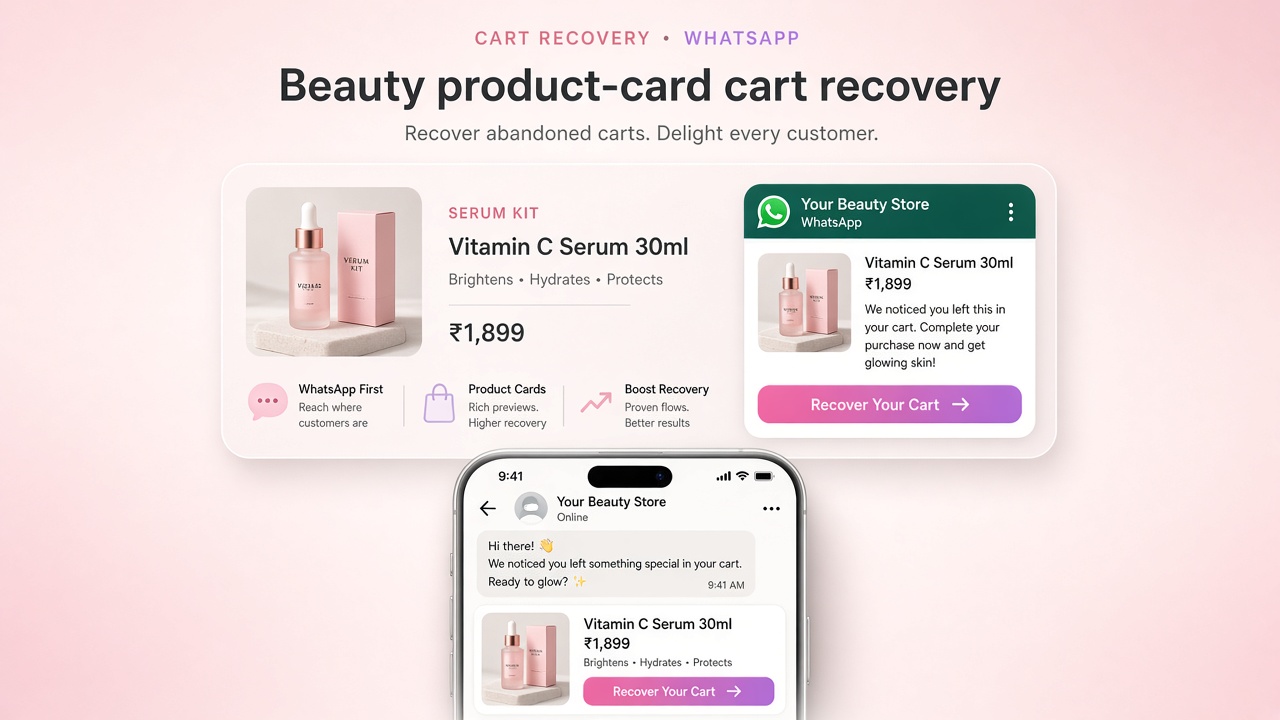
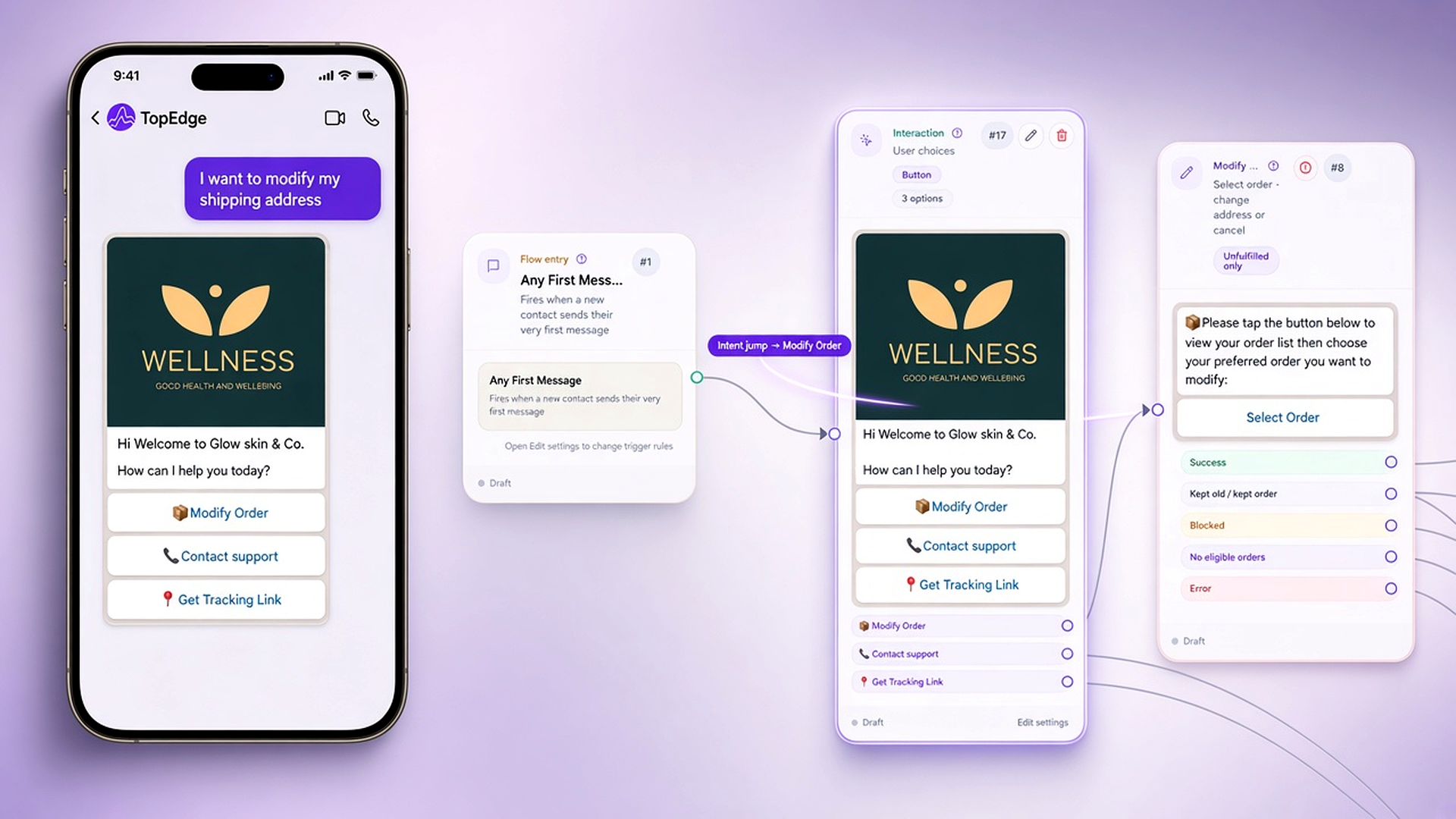
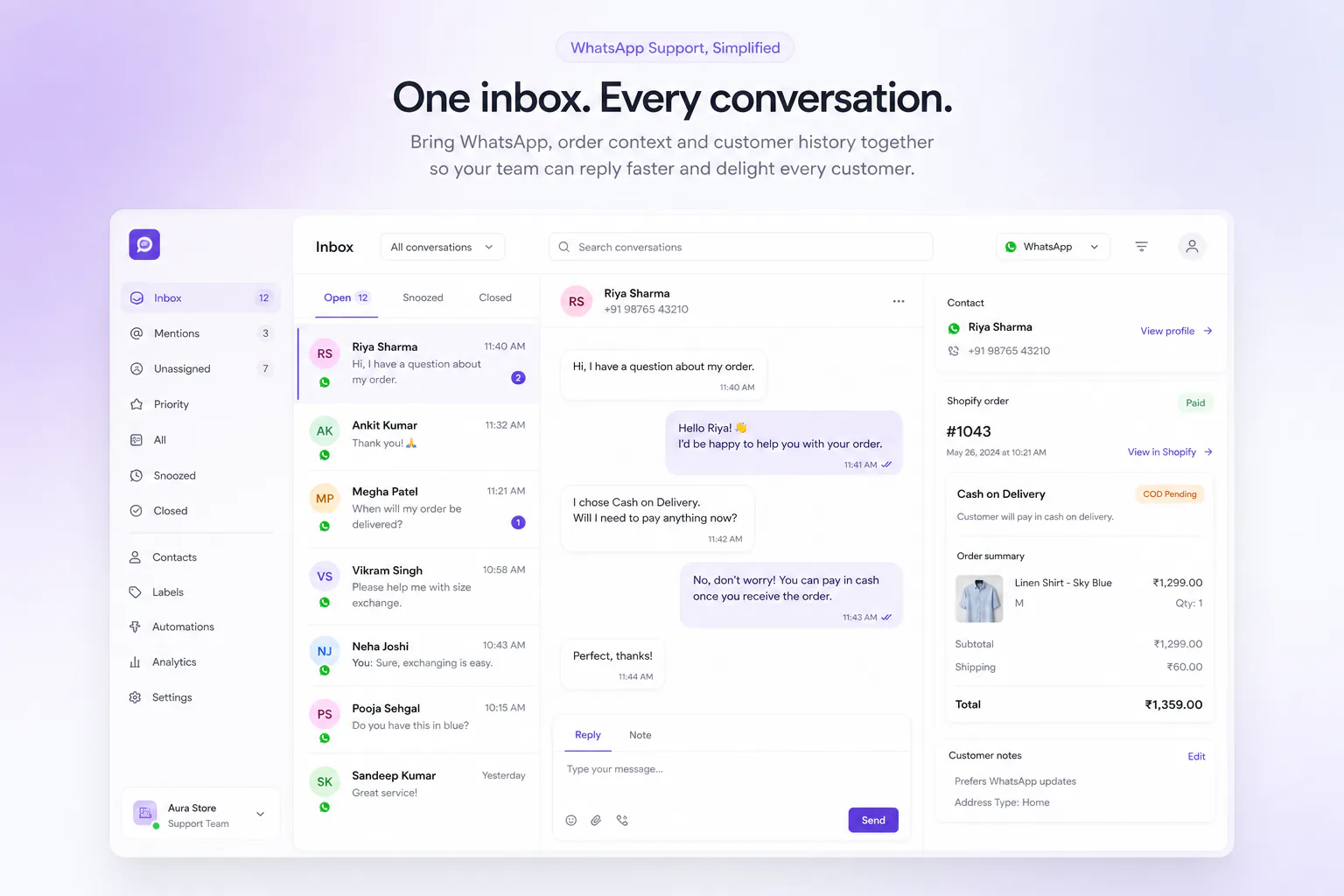
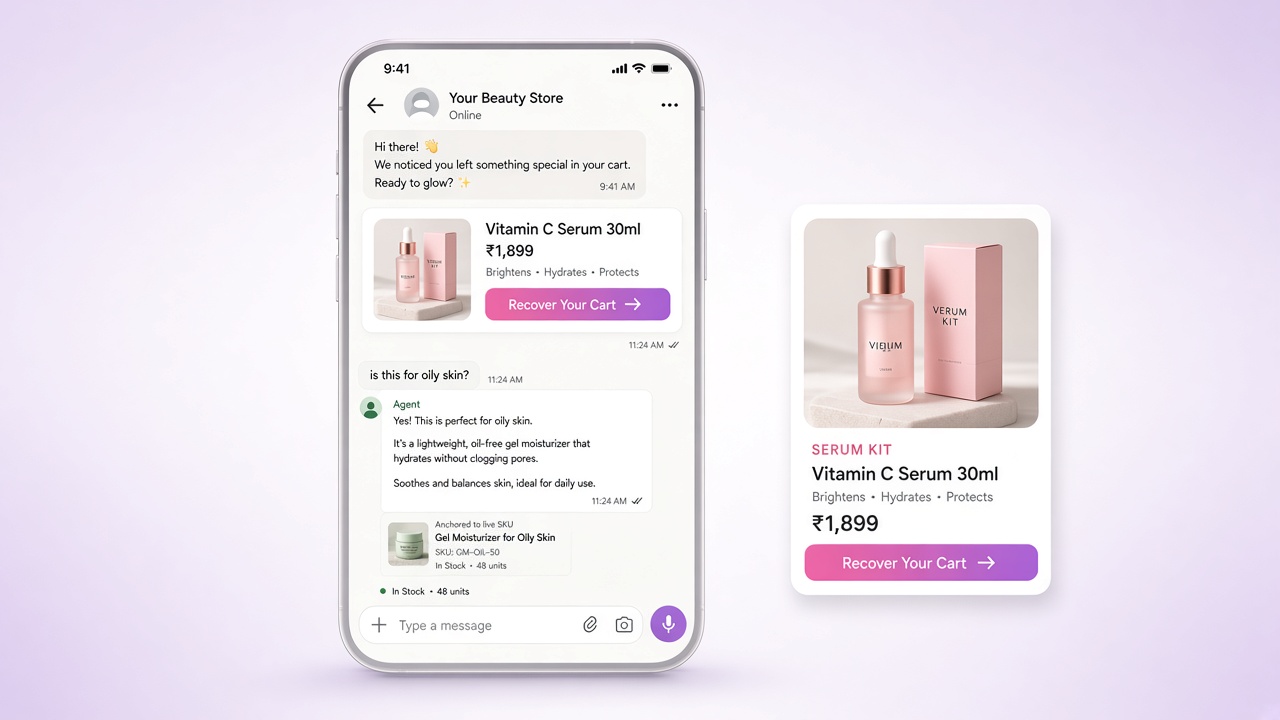
This is the part TopEdge handles. Once a conversation moves to WhatsApp, which is where most Indian buyers continue it, TopEdge's automated journeys keep it alive: cart recovery if they added to cart and left, post-visit follow-ups, and product messages based on what they asked about. The Shopify integration and tracking pixel mean the system knows when a visitor from your social funnel adds to cart, starts checkout or buys, so the right message fires without manual tracking.
Automated Instagram comment-to-DM capture is on the TopEdge roadmap rather than live today, so for now the practical setup is to use Instagram and YouTube to start the conversation, then let WhatsApp automation carry the follow-up. If you are picking tools for that layer, compare them in the best WhatsApp automation tools for Shopify India.
Start with one video
Short-form video is one of the few organic channels left that can take a brand from no visibility to real buyer conversations without an ad budget. But only if the strategy is deliberate.
Post frequently. Build hooks that earn the first two seconds. Lean educational over product showcase. Point your bio links and CTAs at a specific next action. Capture interested viewers into a conversation instead of hoping they remember you. Track what works and make more of it.
Views compound. Audiences grow. Leads get cheaper as your library builds. Start with one video, then another.
Next: capture consent from the traffic you earn, learn how to message that audience safely, or start free on your Shopify store.
Common questions
How often should an ecommerce brand post Reels or Shorts?
Four to five posts a week is the practical baseline for meaningful organic reach, and many of the fastest-growing brands post daily. Frequency matters because it gives the algorithm more chances to find your audience and gives you more data on what works. Treat each video as a test, not a finished piece of art.
What makes a good hook for a short-form video?
A strong hook does one of three things in the first one to three seconds: creates specific curiosity, interrupts the expected pattern visually or verbally, or speaks so directly to one person’s situation that they feel seen. "Here is why most Indian sellers lose money on COD orders" is a hook. "Check out our new product" is an announcement, and nobody stops scrolling for an announcement.
Does educational content or product content sell more?
Educational content generates more leads in almost every ecommerce category, because a product showcase requires the viewer to already want your product while educational content attracts people with a problem and earns trust before introducing the solution. A good mix is roughly 60 to 70 percent educational or problem-solution content and 30 to 40 percent product-led.
How does comment-to-DM lead capture work?
You ask viewers to comment a specific keyword in the video. When they do, an automated direct message sends them whatever you promised — a link, a guide, a discount code. It works because it drives comments, which helps distribution, and it moves an interested viewer into a one-to-one conversation while they are still in the mindset the video created.
How do you track leads and ROI from organic short-form video?
Put UTM parameters on every bio link so the traffic does not show up as direct in analytics, with separate links per platform. On the content side track reach, watch-time percentage, profile visits from each video, link clicks or comment responses, and DM conversations started. Over 30 to 60 days clear patterns emerge about which content actually drives revenue.
Can short-form video replace paid ads for an ecommerce brand?
It can replace a meaningful share of top-of-funnel spend, but it trades money for time and consistency rather than removing the cost. The realistic position is that organic short-form lowers blended acquisition cost over months as your content library compounds, while paid gives you immediate, controllable volume.